We are thrilled that our Founder, Elizabeth Sheehan, has been recognized by the Boston Business Journal as one of their WomenUp. Here, from the feature article, a quote from Elizabeth:
“In international issues of any kind, we need to be patient. Humble. We don’t know what the resource-poor need; we need to listen to them. We really have to turn the table around and collaborate, and understand how communities operate, before you have a solution for them. And be prepared to fail. Failing is where you have your best learning.”
Boston Business Journal subscribers can read the article in full, here.
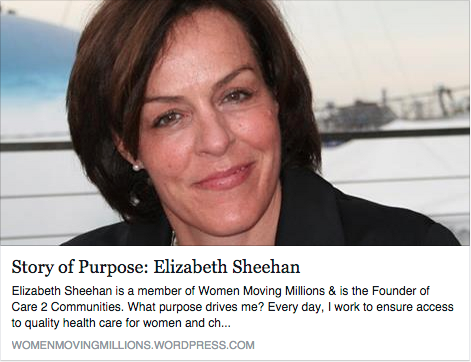
We’re so excited that our President and Founder, Elizabeth Sheehan, has been featured in Women Moving Millions’ Bold Voices blog. Elizabeth spoke at the Women Moving Millions Summit last week, on her approach to leadership as an implementer of social change. You can read the blog on Women Moving Millions’ website.
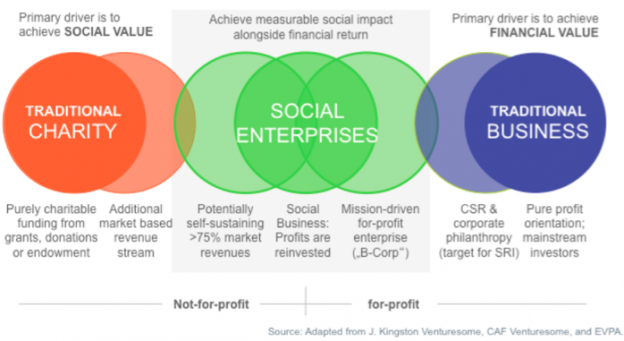
Just like a traditional charity, a social enterprise seeks to a achieve a social good or goal. But a social enterprise also seeks to achieve revenue-generating goals for the purpose of ensuring long-term sustainability. For C2C, that social goal is delivering high-quality health services to poor and low-income families in Haiti Full Article.
C2C is a fundamentally “mission-driven” organization which has borrowed elements of a private-sector operating model. This is because we believe that Haitian families need and deserve a reliable, long-term solution to their health challenges — a solution that cannot be achieved through 100% donor funding.
Poor families are made more vulnerable by inconsistent or unreliable health service providers. We intend to change that. By running our clinics as social enterprises, C2C offers something unique and important to our patients: a guarantee that our low-cost, high-quality services will keep the community healthy.
It’s a common misconception that poor families in Haiti don’t have any options when it comes to healthcare services. But most people living in populated areas like cities or towns do have options and the options run the gamut of low and high cost to low and high quality.
C2C clinic’s fill a central gap: low-cost and high-quality. Still, the decision to seek out health services can be complex: household finances are tight and patients can decide to visit traditional herbal medicine healers, or to travel long distances to government hospitals, or – even worse – to wait, and hope that one’s condition improves.
C2C’s social marketing efforts seek to make these decisions easier for poor families. Our community-based staff members (called Community Health Agents) go household to household, providing health education and answering questions about the C2C clinic’s services, pricing, and the “C2C patient experience”.
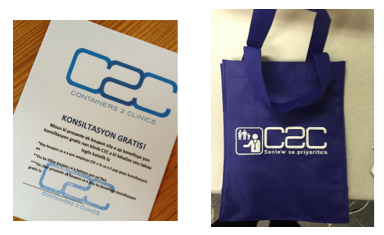
Recently, we’ve been experimenting with a community coupon promotion, which we hope will entice new clients to try C2C!
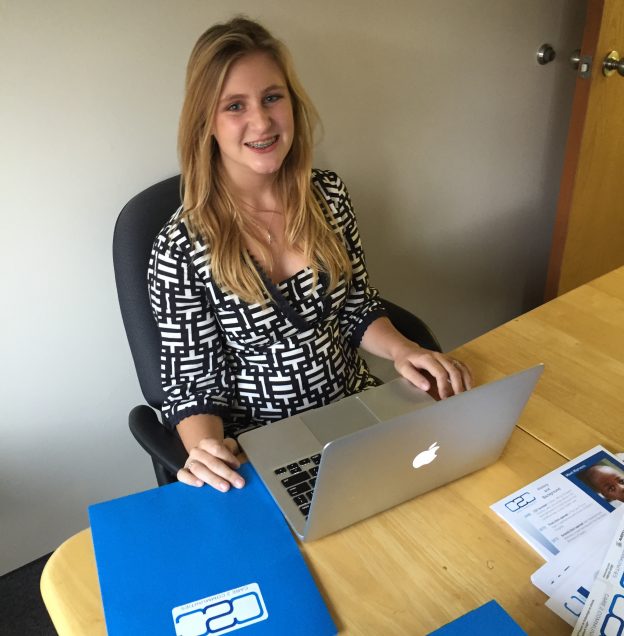
Interning at C2C has taught me things that I wouldn’t normally learn in a classroom. I’ve seen what it takes to run a non-profit organization, and learned eye opening facts about health struggles all over the world.
In the three weeks that I interned, I learned how to use different development tools for data management and grant research. I also learned more about researching and databases, both very useful things to know for my future. I even had the opportunity to sit in on a staff meeting and got a taste of what the real non-profit world is like.
I completed a lot of different projects at C2C, most of which was focused on research. This will really help me in the future, in school and work. My time here has helped me gain experience I need to start thinking about what I want to do with my knowledge in the future.
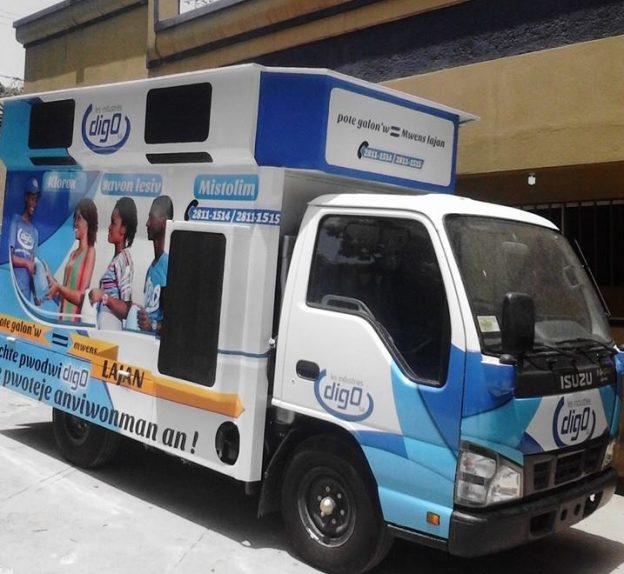
It’s important to C2C to partner with local companies and organizations on the ground. We recently did just that in partnering with Digo Distribution, a social business in Haiti that produces bulk liquid cleaning products: disinfectant cleaner, detergent, and bleach. These products are crucial for Haitian families, especially during the rainy reason.
Digo Distribution is a Haitian-owned business that started as a commercial enterprise. Recently, motivated by a social mission, Digo wanted to reach more low-income people with their products. Yunus Social Business invested in the growth of Digo’s social arm, and partners like C2C bring the products to low-income customers.
By packaging the cleaning agents in bulk drums, customers can bring their own bottles or containers to “fill up” at the Digo station at the C2C clinic! This saves them the cost of purchasing a new product container each time — often a prohibitively expensive prospect for a poor family.
C2C is excited to offer these important products to our patients and to be working with an innovative Haitian-owned social business!
At C2C we aim to reach as many people in the communities we work in as possible. Our Community Health Workers (CHWs) visit households on a daily basis, and our clinic staff see all patients who visit the clinic each day. To continue increasing the number of community members we can help, we’ve added a new feature through our Haiti clinics—community health screenings.
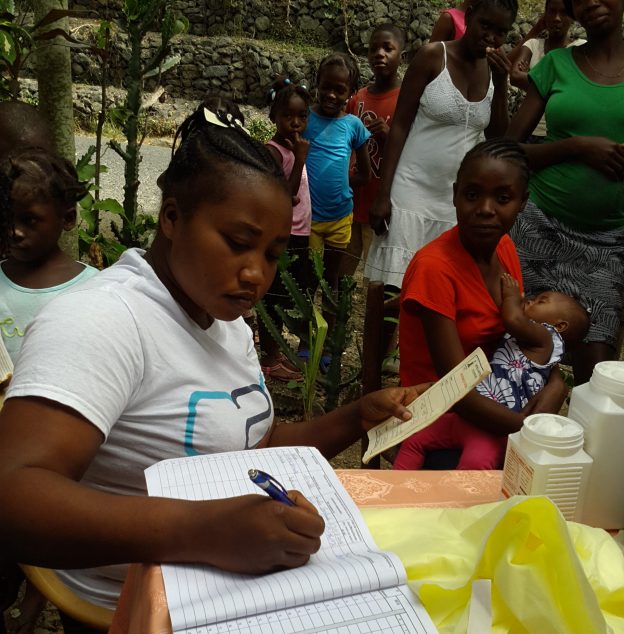
Once a week, our CHWs, along with our nurses and auxiliary nurses, set up a station at a local neighborhood spot, to serve women, children, and families. Community members can purchase a glucose test, and receive free blood pressure screenings, vaccinations, family planning materials, and water purification tabs.
Radio campaigns and local advertisements help spread the word for the service, announcing a different neighborhood each week. Locals can come at any time, pick up free materials, and learn more about the services offered at their nearby C2C clinic. At our Camp Coq clinic alone, there were over 240 participants in the first two weeks.
“Participants were already crowding around the venue when we arrived. People have really appreciated this initiative. Some people even asked when the next visit to their area will be,” said our Camp Coq nurse, Herlande Duvot.
These screenings will allow C2C to provide quality health care to even more members of the Camp Coq and Acul du Nord communities!
We are thrilled to announce that C2C has been awarded a position in the 2015 Yunus Social Business accelerator program in Haiti! This program trains and mentors emerging social entrepreneurs who are using market-based solutions to fight poverty. C2C’s clinic model in Haiti has shown early success and exemplifies the work of the global Yunus community.
The social business accelerator program is supported by USAID and seeks to demonstrate the power of applying a private sector approach to solve society’s most challenging social problems. C2C is proud to be an early leader in a small field of health care innovators in Haiti. We deliver high-quality primary care to poor families every day in a way that ensures long-term financial sustainability and success. We look forward to sharing more information in the coming months about the Yunus accelerator program!
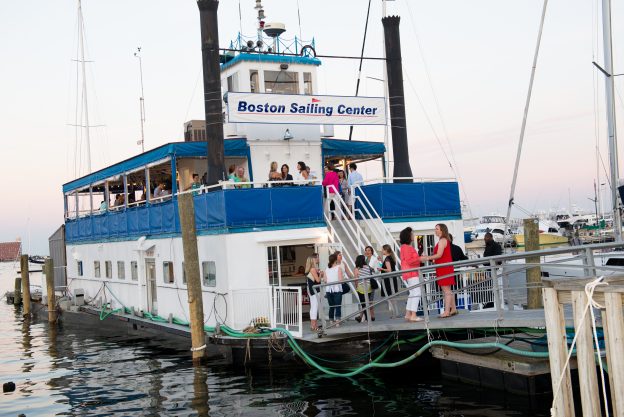
Thanks so much to all the sponsors and the sell-out crowd at Selebrasyon 2015, who helped C2C raise more than $50,000 to support our programs in Haiti!
Guests heard about C2C’s amazing programs in Haiti – serving thousands of families in the North – from Founder, Elizabeth Sheehan, and COO, Allison Howard-Berry. They also danced to Haitian music by Tiz Kompa, enjoyed authentic Haitian food by Sunrise Caribbean Cuisine, perused the auction filled with Haitian arts and crafts, and won stays in three vacation spots. These amazing holidays included a week in a beautiful home in Turkey (donated anonymously), and weekends in homes in New Hampshire (donated by Lynn Hamlin and Tom Maxwell) and Massachusetts (donated by Gerald and Maureen Sheehan).
The event will support C2C’s programs in Haiti, including clinics in Camp Coq, Acul du Nord, and more to open soon!
How do organizations deliver high-quality primary care that remains affordable and accessible to the poor while operating with a long-term plan for financial success? What role do donors and social impact investors play in supporting sustainable and market-based solutions to global issues?
Earlier this month, C2C, CHMI, and Eliza Petrow, Senior Advisor at JC Flowers Foundation and World Education, welcomed more than 40 panelists and guests gathered in Boston for a two-part discussion of these questions and more.
Part I of the discussion, led by Donika Dimovska of CHMI, focused on the importance of primary care worldwide, and highlighted pressing priorities for health care providers. Donika emphasized sharing of best practices through vehicles like CHMI’s Primary Care Collaborative and CHMI’s Primary Care Innovators Handbook (in which C2C is featured).
Donika and panelists, Allison Howard-Berry of C2C, Melissa Menke of Access Afya, and Fiona Walsh of Last Mile Health, spoke at length about the importance of primary care within health systems worldwide and the importance of finding appropriate and sustainable funding streams, including revenue from patient fees. In this way, organizations can ensure their ability to continue providing care to poor families without the risks that come with fully-philanthropic funding.
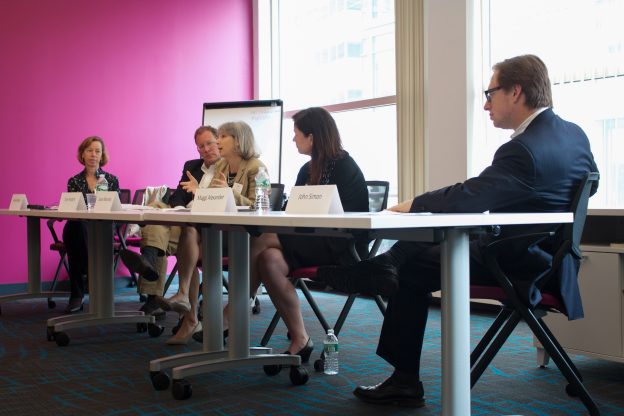
Part II of the discussion showcased the potential for donor and investor involvement in supporting market-based solutions to poverty internationally and domestically. Moderator, Anne Stetson, of the FXB Center for Health and Human Rights at the Harvard T.H. Chan School of Public Health, spoke with panelists, Maggi Alexander of the Philanthropic Initiative, Tom Haslett of Central Square Foundation, Susan Musinsky of the Social Innovation Forum, and Ambassador (ret.) John Simon of Total Impact Capital.
Panelists emphasized trends over the last decade in building market-based solutions to solve some of the world’s most pressing issues: access to health care, financial inclusion, education inequality, and inadequate housing. They discussed philanthropic approaches to solving challenges – how one might apply philanthropic capital to encourage market-based solutions, thereby fueling real and lasting change.
C2C thanks CHMI and all the panelists for sharing this great learning experience with Boston!

 North – from Founder, Elizabeth Sheehan, and COO, Allison Howard-Berry. They also danced to Haitian music by Tiz Kompa, enjoyed authentic Haitian food by Sunrise Caribbean Cuisine, perused the auction filled with Haitian arts and crafts, and won stays in three vacation spots. These amazing holidays included a week in a beautiful home in Turkey (donated anonymously), and weekends in homes in
  New Hampshire (donated by Lynn Hamlin and Tom Maxwell) and Massachusetts (donated by Gerald and Maureen Sheehan).
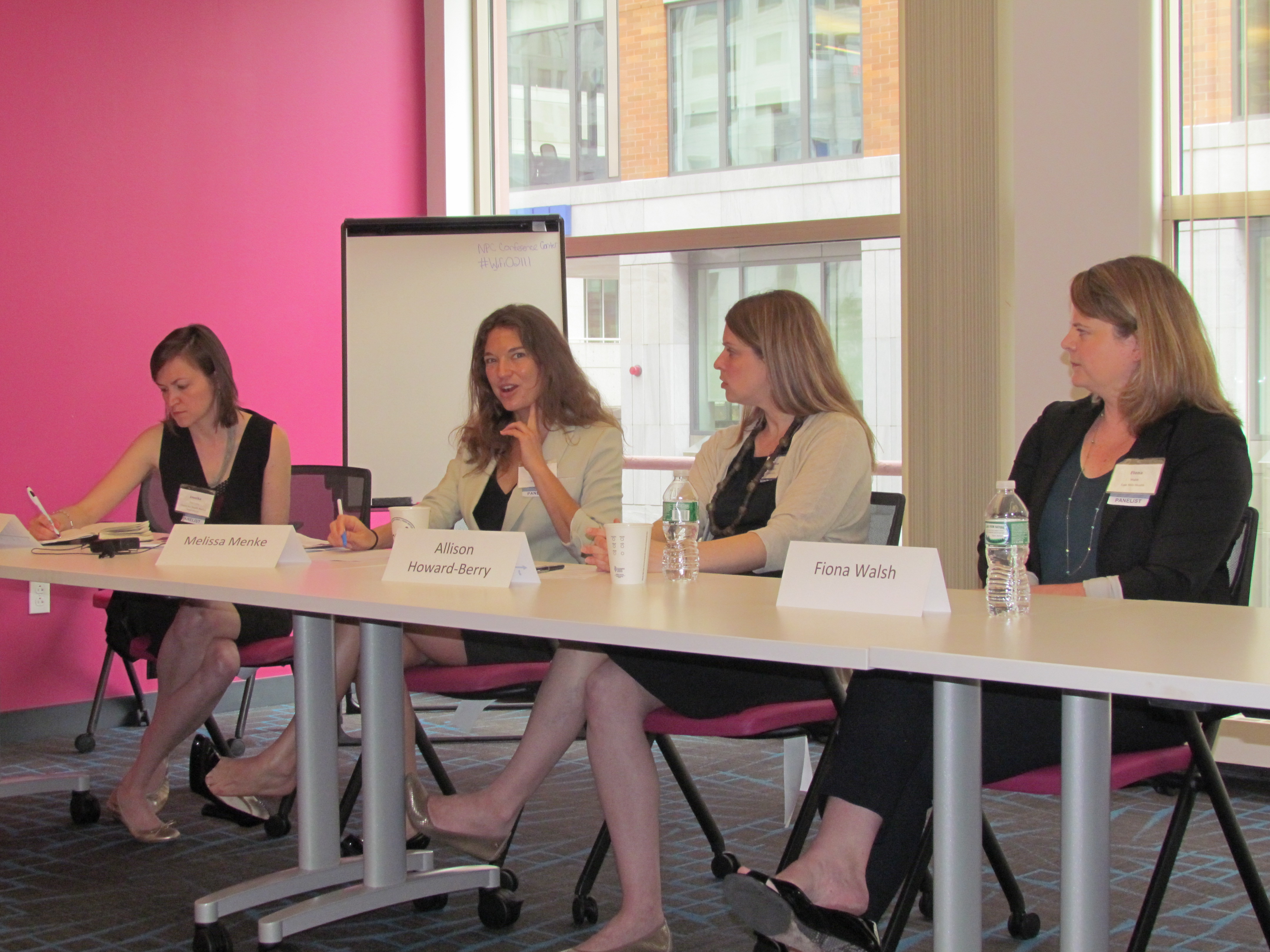 Donika and panelists, Allison Howard-Berry of C2C, Melissa Menke of Access Afya, and Fiona Walsh of Last Mile Health, spoke at length about the importance of primary care within health systems worldwide and the importance of finding appropriate and sustainable funding streams, including revenue from patient fees. In this way, organizations can ensure their ability to continue providing care to poor families without the risks that come with fully-philanthropic funding.
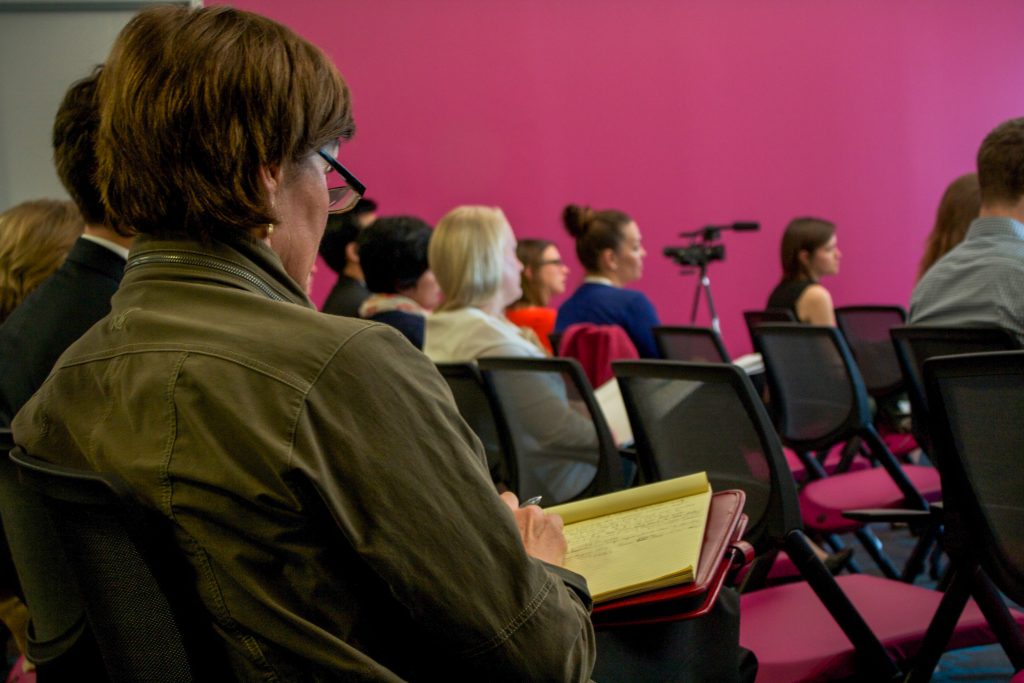 solve some of the world’s most pressing issues: access to health care, financial inclusion, education inequality, and inadequate housing. They discussed philanthropic approaches to solving challenges – how one might apply philanthropic capital to encourage market-based solutions, thereby fueling real and lasting change.