• Meet the New C2C Community Health Workers

    Meet the New C2C Community Health Workers

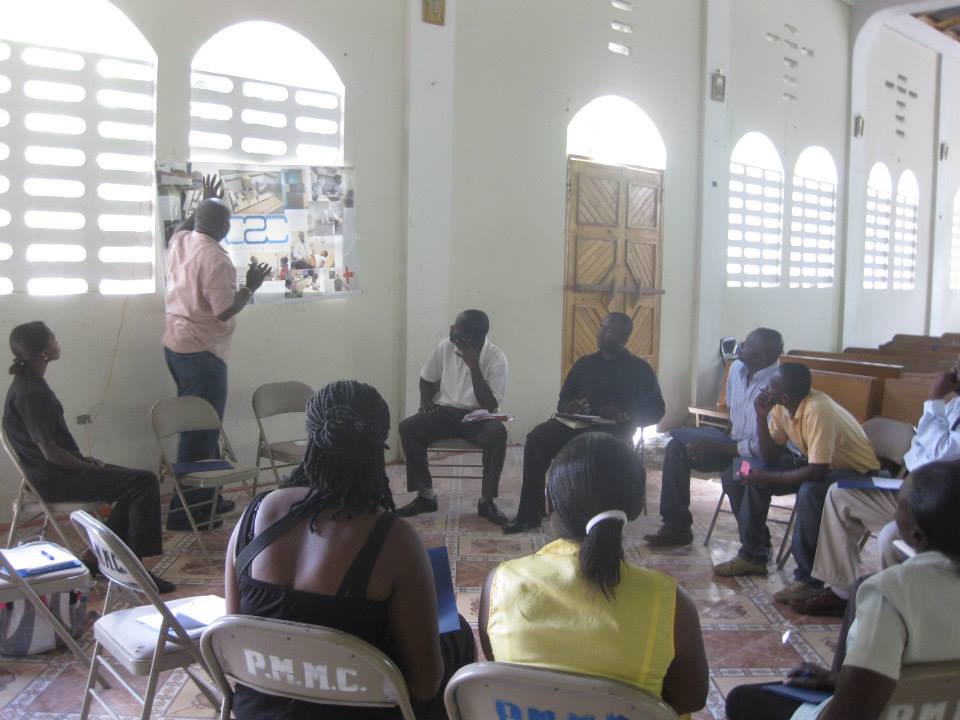
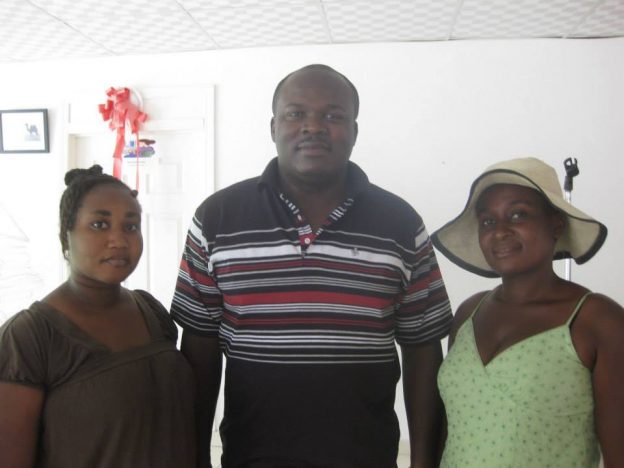
    C2C is delighted to announce that Loudrige Declasse, Louinise Odysse (pictured above, right, with Haiti Country Director, Dr. Jean-Eric Calvaire), and Jorane Pierre (pictured above, left)  have been hired to serve as Community Health Workers (CHWs) based out of the Camp Coq clinic.  These women were selected from a pool of more than 30 local applicants who attended two application sessions (pictured below).
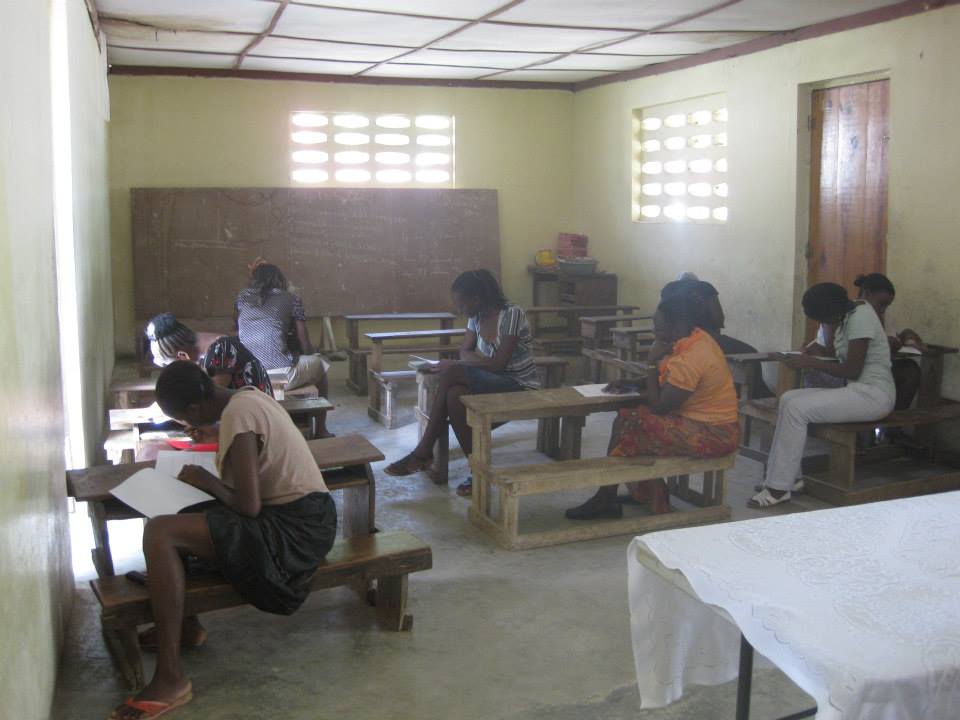
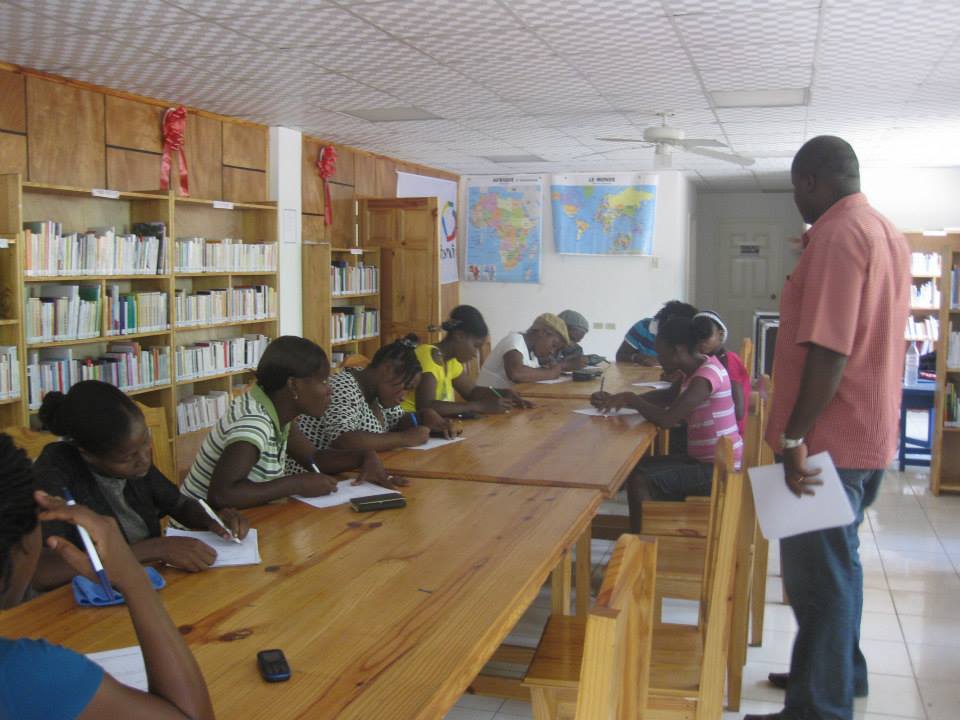
    Loudrige, Jorane, and Louinise will provide a variety of important services to the community, including door-to-door outreach, general health and hygiene education, nutrition and breastfeeding counseling, in-home follow-up visits, and education sessions in the clinic and the community.  They will also serve as links between the clinical staff and the community.  We look forward to sharing stories with you in the future; in the meantime, we would like to introduce them!

    Loudrige Declasse is C2C’s youngest CHW.  She lost her mother in her last year of high school, and had to drop out to support herself.  She became a substitute teacher for younger children, and used savings from that job to start her own small business selling cosmetics at Camp Coq’s weekly market.  She says, “People in Camp Coq are unhealthy because they have no one to teach them to be better.  As a CHW, I can share what I learn and help people take responsibility for their health.”

    Louinise Odysse is in her late 30s, and lives in Camp Coq with her 10-year-old son.  She began training as a nurse years ago, and credits Florence Nightingale as her inspiration.  Her favorite part about her new job is that she will be able to help people make better health decisions through education.  She says, “People don’t have the information they need to stay healthy.  When cholera came to the country, they didn’t know they needed to be careful of their water and food to stay well.  CHWs can help.”

    Jorane Pierre is in her mid-thirties.  She always wanted to be a nurse, but could not afford the training when her father died.  She has worked in health care before, volunteering with the Ministry of Health during immunization campaigns, and loves to help people keep their children healthy.  She and her husband live in Camp Coq with their two little girls, and she says, “CHWs will take responsibility to help community members address health issues together.  The biggest health problem in Camp Coq is that we have not had a facility, and now we are changing that.”
  • Clinic Arrives in Camp Coq!

    Clinic Arrives in Camp Coq!

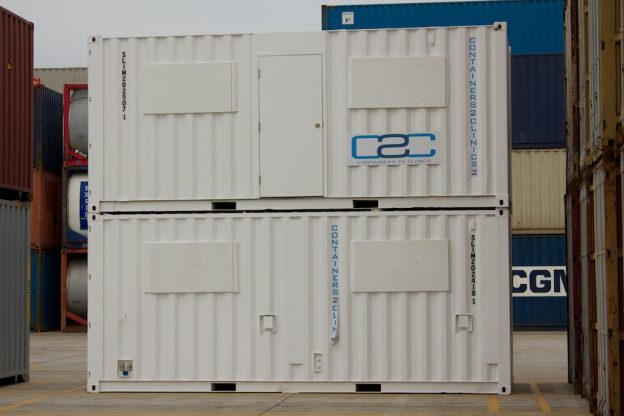
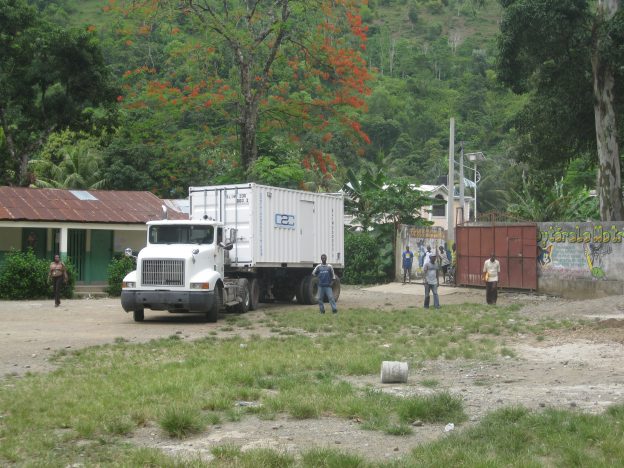
    Clinic containers are in place in Camp Coq and Community Health Workers are on-staff! Next steps – hiring clinical staff, unpacking, opening to serve the community…

  • Clinic Clears Customs! Leaving Cap Haitien for Camp Coq!

    Happy Friday from C2C! Our newest clinic has arrived in Cap Haitien, been cleared through customs, and the containers are happily on their way to serve the community in Camp Coq. American Global Logistics ensured the containers arrived safely in Cap Haitien, donating shipping costs to C2C. The containers will be in place with plumbing and electricity early next week! Photos coming soon!

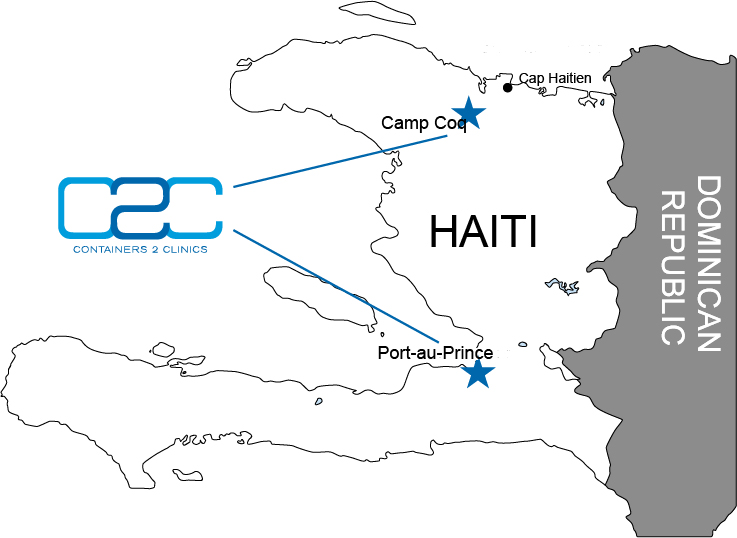
    Haiti Map

  • Clinic leaving Miami. Now Bound for Camp Coq, Haiti!

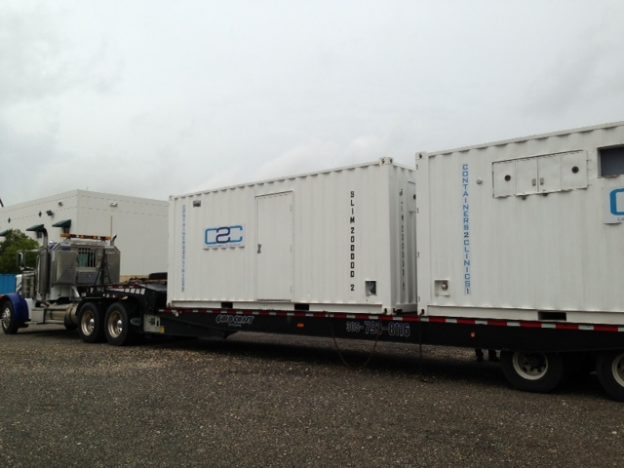
    Clinic leaving Miami.  Now Bound for Camp Coq, Haiti!
    C2C is delighted to share that our third clinic will soon be on its way to Camp Coq, a community in Northern Haiti.
    People living in Camp Coq now must travel hours to receive high-quality medical care for themselves and their children; C2C will bring care closer, make it much less expensive, and create a sustainable community asset in Camp Coq that will serve women and children in the community for years to come.
    This clinic will be staffed with local Haitian physicians, nurses, a lab tech, and community health workers, and will serve between 6,000 and 8,000 patients in its first year of operations.
    Special thanks to all who donated to make this clinic possible for the people of Camp Coq, especially Jack Connors, Gerald Sheehan, guests at a fall 2012 event hosted by Jack, Gerald, and Sue and Bernie Pucker, members of C2C’s 50 Women group, Ruthie Barker and Kathryn Sargent, the Emerging Markets Trade Association, and American Global Logistics.
  • Follow the Journey From Fabrication to Opening Day and Beyond

    Follow the Journey From Fabrication to Opening Day and Beyond

    What does it take to open a primary care clinic in Haiti?  Join us as we work to open our newest clinic – from fabrication to opening day and beyond, follow what happens on our blog.  We hope you will ask questions and offer suggestions and support along the way.

    Let’s start with where we’ve been:

    Clinic Fabrication

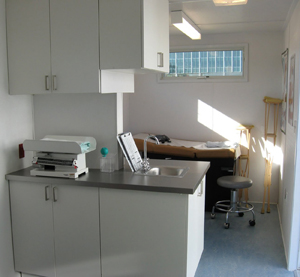
    C2C Clinic InteriorOur fabricator in Miami started with an empty shipping container.  He added high windows for ventilation that preserves privacy; then he added flooring, shelves, cabinetry, and doors until the interior looked just like any other doctor’s office.  Medical equipment, including examination tables, lab equipment, and other necessary items, was packed inside the clinic.  This entire process takes up to 6 weeks.

    Site Research/Decision

    1044127_444444092329886_1404156843_nC2C spent many months researching potential clinic locations in Haiti, suggested by the Ministry of Health and other nonprofit organizations.  C2C chose Camp Coq because there was need, a population large enough to support a clinic, and community support for a clinic.  C2C conducted in-depth community research – focus groups, door-to-door surveys, community leadership interviews – early in 2013 before finalizing the site.

    Now where we are:

    Shipping and Site Preparation

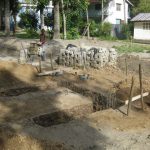
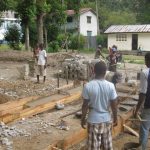
    From our fabricator’s site in Miami, the clinic will soon travel more than 600 miles to its new home – Camp Coq, Haiti.  Workers are preparing the site for the clinic, placing concrete footings to hold it in place, and leveling the grounds.

    999017_444444032329892_1272415476_nCommunity Steering Committee

    A steering committee is in place, comprised of 11 Camp Coq community leaders, to guide C2C’s entry into the community and serve as ambassadors for the organization to their neighbors and friends.

    • And finally, where we’re going in the next few weeks – we hope you will check back often for news! Health Education Staff Hiring

    Clinic Staff Hiring

    Staff Training and Orientation

    Community Outreach

    Clinic Opening

  • International Women's Day 2013

    At C2C, women are at the heart of everything we do.  Our clinics, which specialize in maternal care, ensure that women stay healthy so that they can care for their families and be leaders in their communities.  Today is International Women’s Day, which gives us a special opportunity to honor and thank women around the world who do so much for their communities each day.

    UN Women has also chosen to honor women today, through the art of music.  They’ve teamed up with women from many countries to create One Woman, a song “that inspires listeners to join the drive for women’s rights and gender equality”.  It’s a beautiful song that features singer Emeline Michel of Haiti, among others.

    We encourage you, in honor of this holiday, to talk to someone today about the challenges that women face and C2C’s dedication to keeping them healthy.

    ,
  • Global Maternal Health Conference 2013

    C2C is dedicated to expanding the global health conversation to include new health care delivery methods that achieve sustainability over time.  We believe that encouraging discussion and innovation in maternal health issues is absolutely critical to generating new solutions for women and babies around the world.

    Luckily, we are in good company!  This month, the Global Maternal Health Conference was held in Arusha, Tanzania.  The conference, which promotes the sharing of ideas, innovations, and information in the field of maternal health, featured almost 700 presenters and participants.

    The Conference website contains materials for most of the presentations that took place, and is a great resource for everyone interested in current maternal health issues.  For example, this presentation examines improving knowledge of birth preparedness in Bihar, India.

    To view the resources from the conference and join the conversation, take a look at the conference website here.

    ,
  • Seeing Their Child for the First Time

    Seeing Their Child for the First Time

    Who hasn’t stared with at least a little confusion at an ultrasound picture?  Is that really the baby’s head?  Those fuzzy pictures connect us to babies before we can hold them.  They link us to our children, grandchildren, nieces, nephews, and the children of friends – all of whom we can’t wait to meet!  Even more important, they help doctors identify and address many complications before they endanger mother or baby.

    Unfortunately, most soon-to-be parents worldwide don’t have access to this technology that we take for granted.  Doctors and nurses practicing in the developing world are often unable to spot difficulties in time to save lives.  By including ultrasound as part of comprehensive prenatal care, we can address many of the World Health Organization’s top causes of maternal and neonatal mortality: hemorrhage, obstructed labor, asphyxia, birth injuries, and preterm births.

    Thanks to generous funding this year from MA and James Gallerani, the Dorothea Haus Ross Foundation, and the Jack Tarver Foundation, expectant mothers visiting our clinic in Port-au-Prince do have access to ultrasound technology.  Our clinicians are able to identify abnormalities early, determine gestational age and estimate due dates, and monitor uterine cysts and other conditions that might become dangerous.  They are able to diagnose issues on the spot – without asking the mother to wait, return to the clinic in a week, or travel for a referral.  For women who often journey hours to our clinic, it is critical that they are able to access necessary care quickly and in one location.

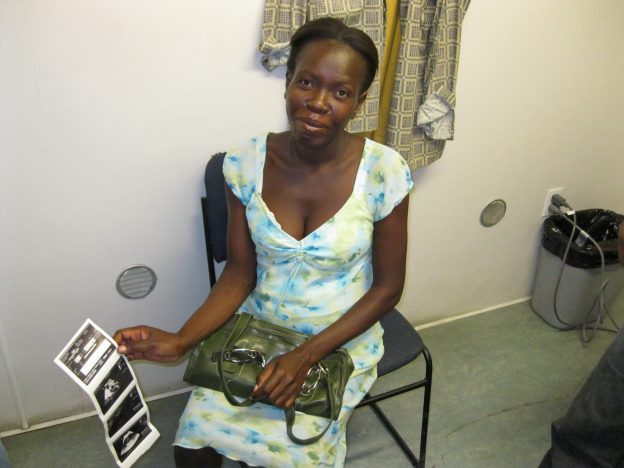
    As we all look forward to a bright 2013, I would like to introduce you to Rosemonde and Joulie (pictured above and below).  They are especially hopeful for the New Year, and have much to look forward to as they wait to meet the babies they have just seen for the first time.  From all of us at C2C, here’s to a beautiful New Year for our patients, our supporters, and our organization’s growth to serve thousands more women and children!

  • Are We There Yet?

    “Are we there yet?,”  How many times have you heard your kids ask this question while en route to your destination?  The same question is being asked in the arenas of global development with respect to the 2015 Millennium Development Goals (MDGs) and improving international development efforts.  To be clear, while the MDGs are the closest road map we have to taking a bite out of globabl poverty, they are by no means comprehensive in outlining what is needed to make the world in which we live a more equitable, peaceful and safe place.

    As The Lancet aptly points out in its recently published <a href="http://www click over here now.thelancet.com/journals/lancet/article/PIIS0140-6736%2812%2962092-3/fulltext” target=”_blank”>“A manifesto for the world we want” , there are things we need to attend to that fall outside the carefully worded MDGs that are still critical for a world we want to leave out children.  Front and foremost is the role of women in society and the need to provide them the basic rights to education, health and employment that men enjoy.  The Lancet calls for integrated development efforts; women need basic health, education and job opportunities to break the cycle of poverty in to which they are born.  You cannot have one without the other two and expect a woman to be able to overcome the obstacles to moving beyond her economic station.  As we move into this holiday season and reflect on that for which we are most thankful, let us also renew our pledge to those women and children in developing nations who do not yet have a voice and cannot lift themselves out of the impoverished slums, squatter camps and underdeveloped villages into which they were born.  “Are we there yet?”  No we are not, but we are getting ever closer to our destination:  A world we want.

  • C2C's Community Health Education Program

    C2C's Community Health Education Program

    We’ve been working on a Community Health Education program for a few months, and are excited to share some of our progress and impacts.  In partnership with Grace Children’s Hospital, our twelve month program strives to improve health knowledge, attitudes, and practices among community members, as well as training Traditional Birth Attendants (TBA’s) to enable safer labors and deliveries.

    To date, 19 Community Health Workers (CHW’s) have been trained on health communication techniques and health data collection, and have visited over 150 pregnant women in their homes.  UNICEF and the World Health Organization identify home visits as a vital step in improving newborn survival, and C2C’s home visit program helps to identify high-risk pregnancies- leading to safer births and healthier infants.  The CHW’s have also distributed dozens of antenatal care kits to pregnant women in the community.  The kits include essential items like diapers, blankets, soap, and warm clothing which can drastically reduce infant mortality.

    Finally, C2C and Grace Children’s Hospital have continued our “Responsible Motherhood Program”, which awards certificates to women who attend 4 antenatal care visits and are committed to healthy pregnancies.  Future initiatives as part of our Health Education Program include Mothers’ Club meetings at our clinic and targeted outreach to HIV-positive mothers.

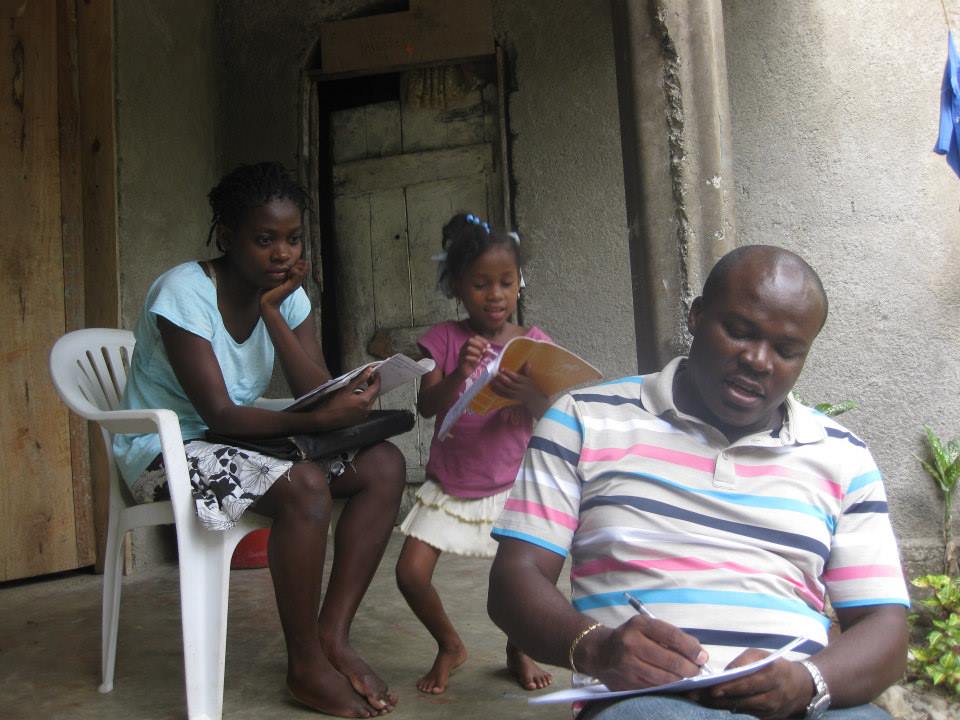
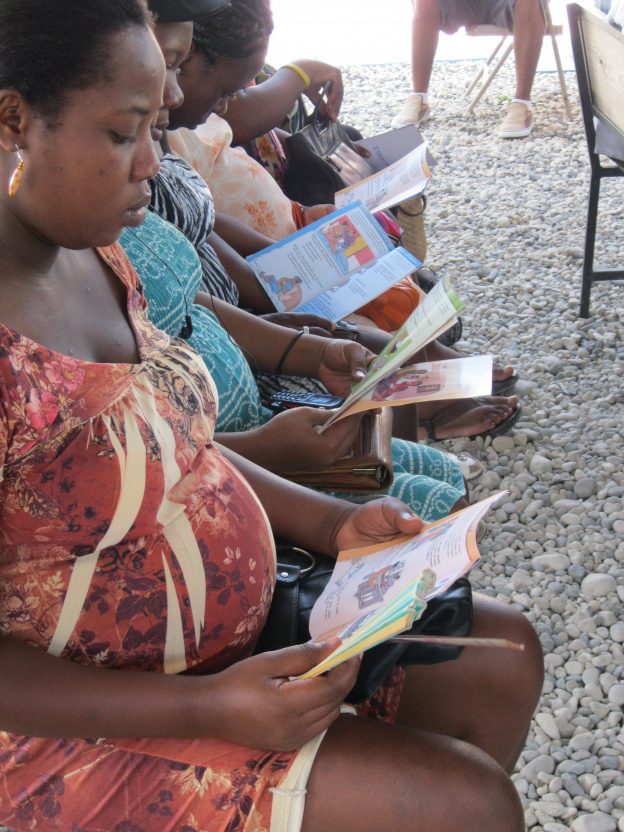
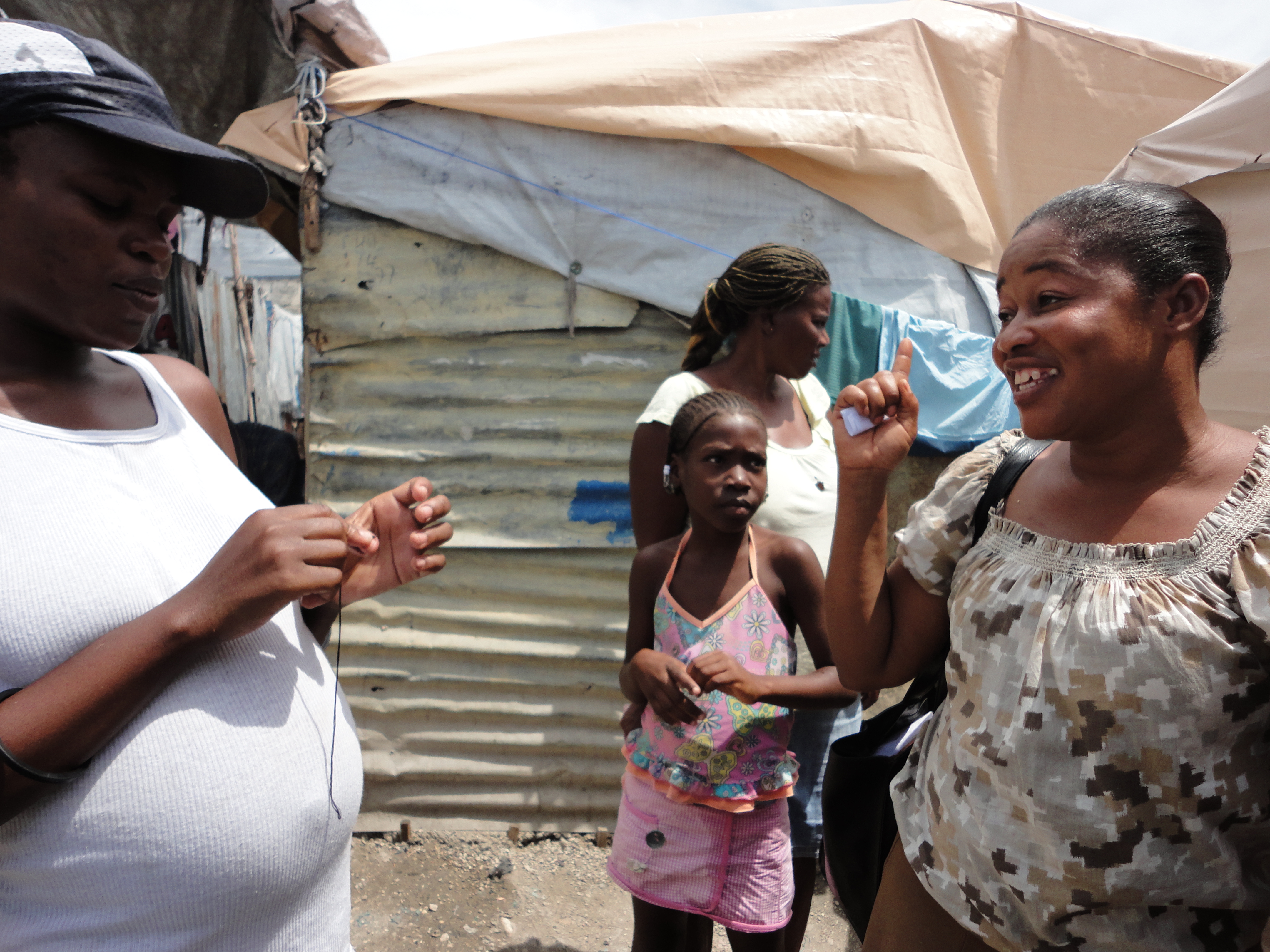
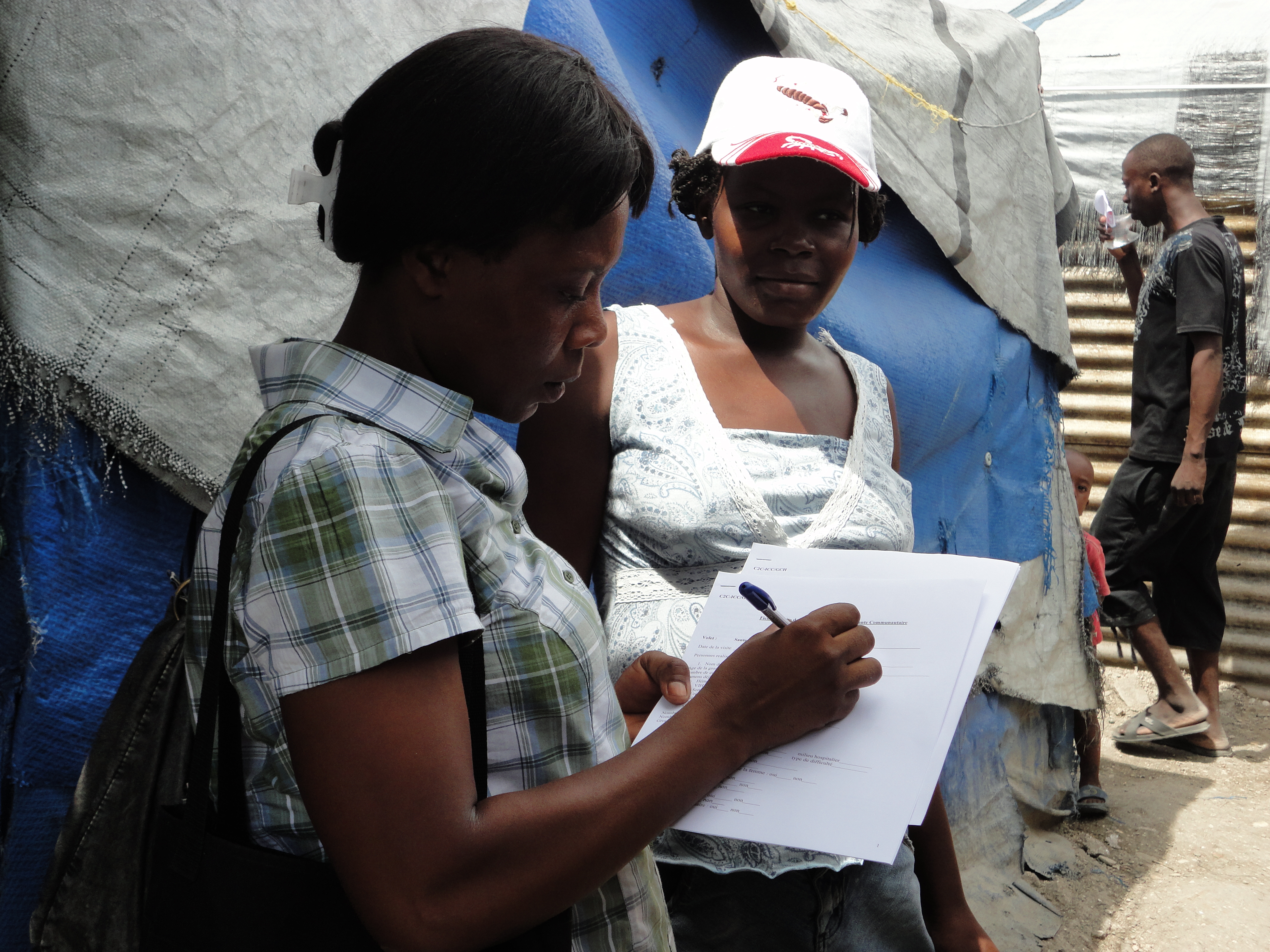
    This Health Education Program is vital in the community surrounding our clinic, which is characterized by extreme poverty and informal housing.  Our passionate, skilled CHW’s serve the heart of this community to identify at-risk pregnancies and encourage healthy pregnancies.  This direct impact can be seen in our patients who receive care at our clinic and go on to have safe births and thriving babies.  Below, see some photos of the CHW’s at work in Port-au-Prince.

    ,